

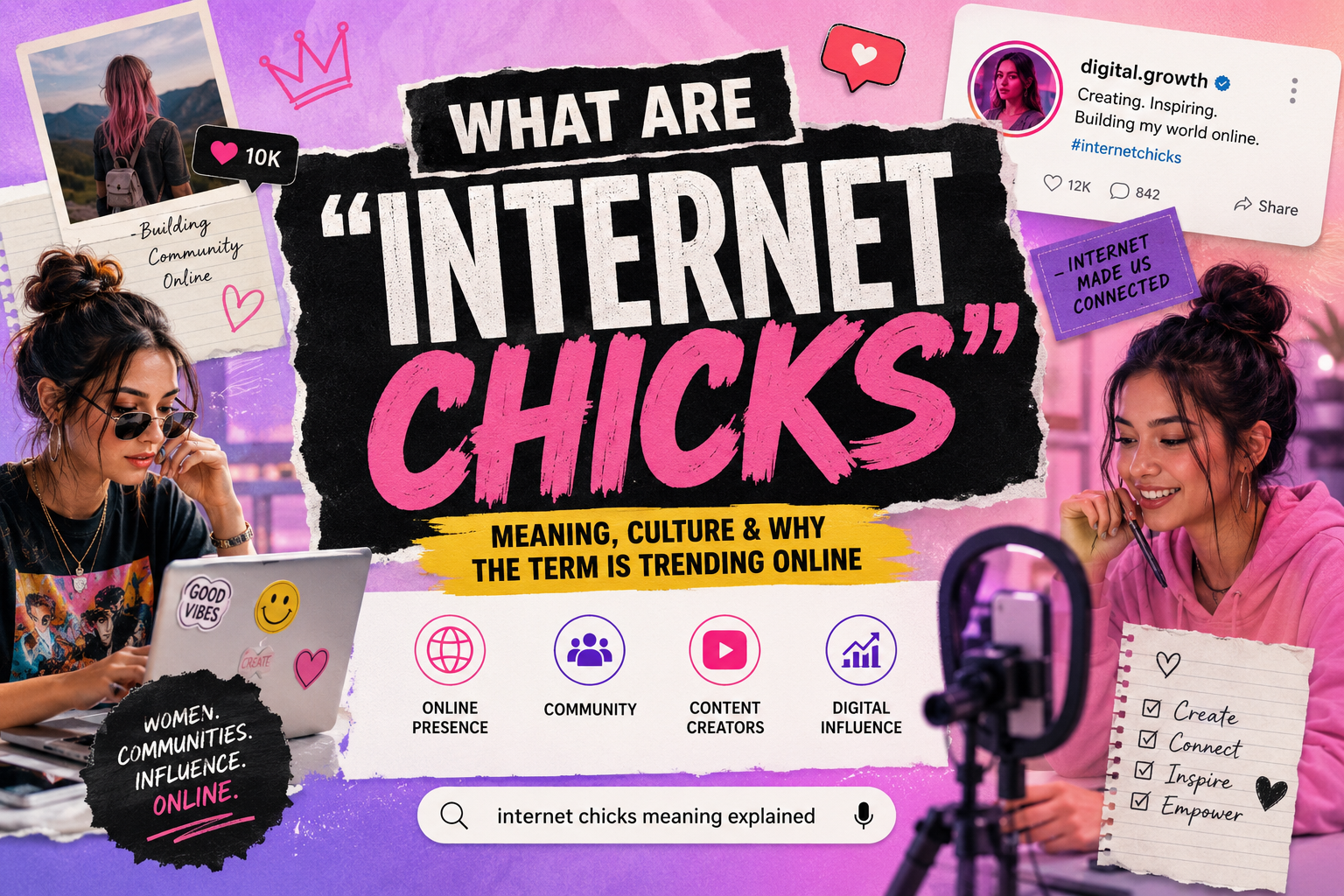
If you’ve searched for “internet chicks” recently, you’ve probably noticed the term appearing everywhere. For example, you might see it in social media bios, blog posts, and niche community forums. But what does it actually mean? Where did it come from? And why are more people searching for it?
This guide explains the term in plain language. It covers its meaning, possible origins, modern usage, and role in online culture. It also explores what the phrase tells us about today’s digital communities.
What Does “Internet Chicks” Mean?
The term “internet chicks” is informal internet slang. It generally describes women who have built a presence or following online. For example, they may be content creators, bloggers, community builders, or digital personalities.
Unlike formal job titles, this phrase has no single official definition. Instead, people use it to describe women who share their ideas, create content, and connect with audiences online.
Over time, internet slang can take on different meanings. Similarly, the phrase may sound playful in one context but inappropriate in another. Therefore, its meaning often depends on who uses it and where it appears.
Where Did the Term Come From?
The phrase “internet chicks” appears to follow a common pattern in internet culture. Informal expressions often begin in online communities and spread as more people use them.
For example, similar slang can appear in blogs, discussion forums, and social media posts. Over time, these expressions may reach wider audiences.
As digital creators have become more visible, people have developed new ways to describe online identities. However, the exact origin of “internet chicks” is unclear based on the information available here.
Therefore, it is best to understand the phrase through its current usage rather than assume it has one confirmed origin.
How the Term Is Used Today
You’ll typically see “internet chicks” (and variations like “internet chick” or “internetchick”) used in a few different contexts:
- Community and culture pieces — articles discussing women’s presence and influence in online spaces, digital communities, and content creation.
- Social media culture — as an informal descriptor within online conversations about digital identity and internet culture.
- Search and content trends — the phrase itself has become a keyword that content creators and blogs write about, partly because people are curious about its meaning.
Because the term is informal and community-driven, its exact meaning can shift depending on where you encounter it — which is part of why so many people end up searching for a clear explanation.
Why Is This Term Trending in Search?
A few things typically drive spikes in searches for a phrase like this:
- Curiosity about slang — when a term shows up in a caption, video, or comment section without context, people search to understand it.
- Content creators covering the topic — as more blogs and creators publish explainers, search interest tends to grow in a feedback loop.
- Niche communities gaining visibility — terms tied to specific online subcultures often break into mainstream search once enough content references them.
If you’re seeing the term more often, it’s likely a combination of all three.
Key Takeaways
- “Internet chicks” is informal internet slang, not a formal or official title.
- It broadly refers to women with a strong presence, influence, or community built primarily online.
- The term’s meaning has evolved over time and can vary depending on context.
- Its rise in search interest reflects broader curiosity about internet culture and digital identity.
Frequently Asked Questions
Is “internet chicks” an official term? No — it’s informal slang used across blogs, social media, and online communities rather than a recognized or official title.
Does the term refer to a specific group or website? Not exclusively. It’s used broadly to describe a type of online presence, though some sites and communities have also adopted similar names.
Why do people search for this term? Mostly out of curiosity — the phrase shows up in online conversations without much context, so people look it up to understand what it means.