

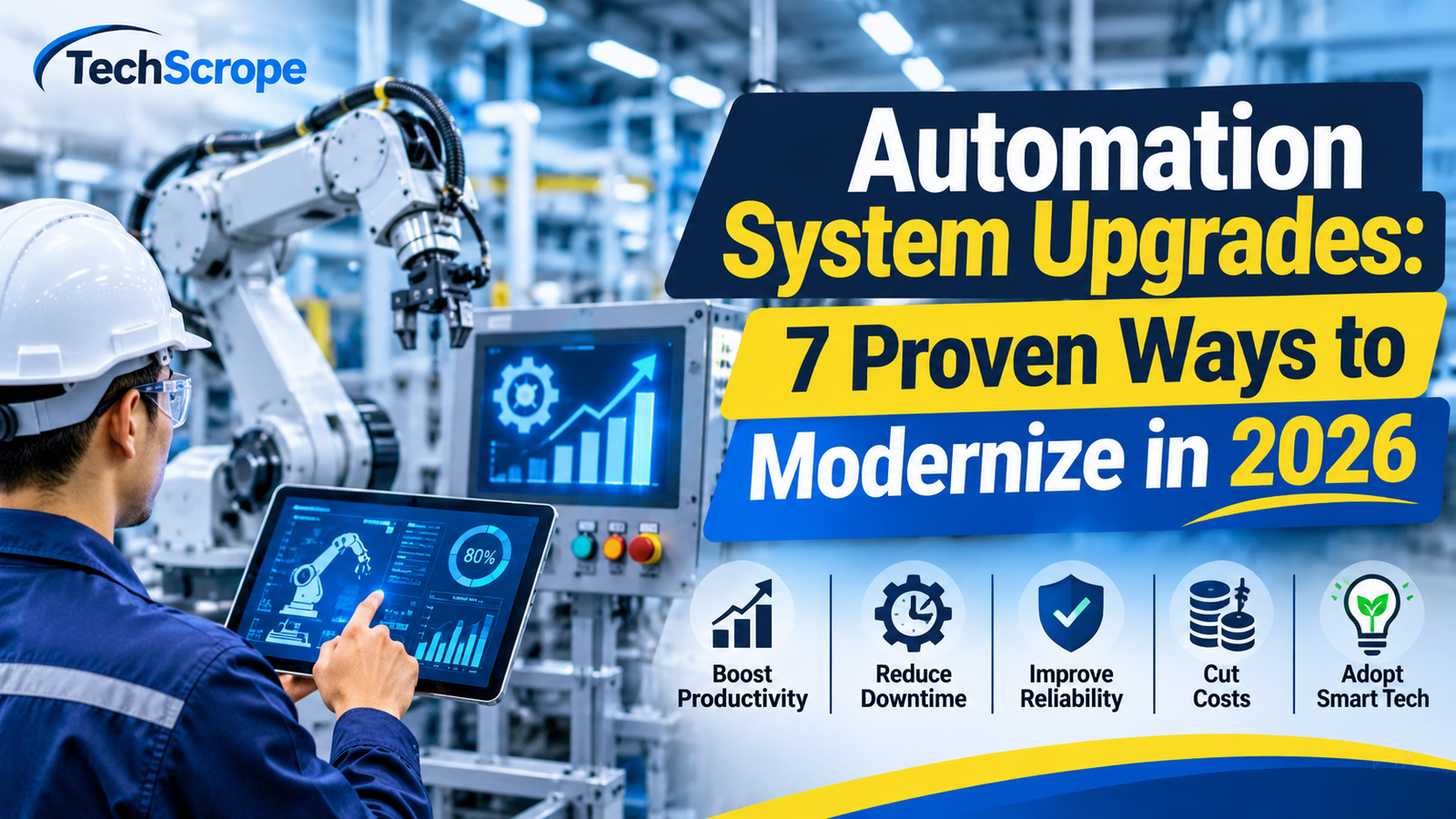
Automation system upgrades help manufacturers improve productivity, reduce equipment downtime, and extend the life of existing machinery. Instead of replacing an entire production system, businesses can often achieve better results by updating outdated controls, software, and automation components.
The right upgrade strategy depends on your equipment, production goals, budget, and technical requirements. This guide explains how to evaluate your current infrastructure, choose the right improvements, and plan a successful modernization project.
What Are Automation System Upgrades?
Automation system upgrades involve improving existing automated equipment through hardware replacements, software enhancements, control system improvements, or integration with modern technologies.
These upgrades help industrial facilities maintain reliable operations while adapting to changing production demands.
For example, a manufacturer might replace an obsolete programmable logic controller (PLC) while keeping the existing machinery, sensors, and mechanical components.
The goal is to improve system performance without investing in unnecessary equipment replacement.
Upgrade vs. Retrofit vs. Replacement
Although these terms are often used interchangeably, they describe different approaches.
| Approach | What It Means |
|---|---|
| Upgrade | Improves the performance or reliability of an existing system. |
| Retrofit | Adds new capabilities to equipment that was not originally designed for them. |
| Replacement | Removes an existing system and installs new equipment. |
An upgrade may involve replacing an outdated control panel, while a retrofit might add robotic loading to a manually operated machine.
The best approach depends on the condition of the existing equipment and the improvements required.
7 Proven Ways to Improve Automation System Upgrades
Successful automation system upgrades begin with identifying the limitations of existing equipment and selecting improvements that deliver measurable operational benefits.
1. Replace Obsolete Control Systems
Older PLCs, industrial controllers, and control panels can become difficult to maintain when manufacturers discontinue support or spare parts become unavailable.
Replacing obsolete controls with modern alternatives can improve processing speed, reliability, and compatibility with newer equipment.
Before replacing a controller, review its existing programs, communication protocols, input/output requirements, and safety functions.
A phased replacement strategy can help reduce disruption while maintaining production continuity.
2. Modernize Human-Machine Interfaces
A human-machine interface (HMI) allows operators to monitor equipment, review production information, and control industrial processes.
Older interfaces may provide limited visibility into equipment performance or require complicated navigation.
Modern HMI systems can introduce clearer dashboards, improved alarms, real-time monitoring, and easier access to operational information.
These improvements help operators identify problems earlier and make informed decisions.
3. Upgrade Industrial Communication Networks
Industrial automation systems rely on communication networks to exchange information between controllers, sensors, machines, and monitoring platforms.
Outdated networks may limit system performance or prevent integration with modern equipment.
Industrial automation upgrades can introduce more reliable communication technologies, standardized protocols, and improved network architecture.
Businesses should evaluate network capacity, compatibility, security, and future expansion requirements before making changes.
4. Improve Automation System Cybersecurity
Older automation equipment may lack modern security features, making it difficult to protect industrial operations against unauthorized access.
Security improvements can include network segmentation, controlled remote access, stronger authentication, and regular software updates.
Organizations should also maintain secure backups of control programs and system configurations.
Cybersecurity should be considered throughout the upgrade process rather than added after installation.
5. Introduce Predictive Maintenance
Traditional maintenance schedules often depend on fixed intervals or equipment failure.
Predictive maintenance uses operational data to identify potential problems before they cause unexpected downtime.
Sensors and monitoring systems can track temperature, vibration, energy consumption, and other performance indicators.
These insights help maintenance teams prioritize inspections and address developing issues earlier.
6. Integrate Legacy Automation Systems
Many industrial facilities rely on equipment that has operated successfully for decades.
Replacing every legacy component may be expensive and unnecessary.
Legacy automation system integration connects older equipment with modern control systems, monitoring platforms, and production software.
For example, an industrial gateway may allow an existing machine to share operational data with a modern monitoring platform.
Integration should account for communication compatibility, data quality, cybersecurity, and equipment limitations.
7. Improve Energy Efficiency and Production Monitoring
Automation upgrades can help businesses identify energy waste and improve equipment utilization.
Modern monitoring systems can track electricity consumption, production output, idle time, and machine performance.
These measurements allow operators to identify inefficient processes and prioritize improvements.
Energy monitoring can also help businesses evaluate whether an upgrade is delivering the expected operational benefits.
Benefits of Automation System Upgrades
The benefits of automation system upgrades extend beyond replacing outdated equipment.
A carefully planned project can improve operational performance while reducing long-term maintenance requirements.
Reduced Downtime
Modern controls and monitoring systems can help identify equipment problems before they interrupt production.
Replacing unsupported components also reduces the risk of extended downtime caused by unavailable spare parts.
Improved Productivity
Faster controllers, better communication networks, and improved operator interfaces can help streamline production processes.
These improvements may increase throughput without requiring a complete facility redesign.
Lower Maintenance Costs
Modern equipment can be easier to diagnose, maintain, and support.
Upgrading obsolete components may reduce the time technicians spend troubleshooting recurring problems.
Better Production Visibility
Modern monitoring platforms provide clearer information about equipment performance, production output, and operational efficiency.
This information helps managers identify bottlenecks and make better decisions.
Extended Equipment Lifespan
When the mechanical structure remains in good condition, targeted upgrades can extend the useful life of existing machinery.
This approach may reduce capital expenditure compared with replacing an entire production system.
How to Plan Automation System Modernization
A successful modernization project requires careful assessment, realistic scheduling, and coordination between engineering, operations, and maintenance teams.
Step 1: Assess the Existing System
Begin by documenting the current automation infrastructure.
Review equipment age, controller models, software versions, communication protocols, maintenance history, and current performance.
Identify components that are obsolete, unreliable, or difficult to support.
Step 2: Define Your Upgrade Objectives
Establish clear goals before selecting new technologies.
Your objectives might include reducing downtime, improving production speed, increasing safety, or enabling better data collection.
Choose measurable indicators that will help you evaluate the results.
Step 3: Evaluate Compatibility
Determine which existing components can work with the proposed upgrades.
Review electrical interfaces, communication protocols, software compatibility, and mechanical requirements.
Compatibility testing can help identify potential integration problems before installation.
Step 4: Develop a Realistic Budget
The total cost of an upgrade includes more than equipment purchases.
Consider engineering, installation, programming, testing, training, downtime, and ongoing maintenance.
Include a contingency allowance for unexpected technical issues.
Step 5: Create a Phased Implementation Plan
Divide the project into manageable stages.
Where practical, begin with non-critical equipment before upgrading essential production systems.
Schedule major changes during planned maintenance windows to minimize disruption.
Step 6: Test Before Going Live
Before commissioning, verify that the upgraded system performs as expected.
Testing should include normal operating conditions, communication failures, emergency procedures, and relevant safety functions.
Document the results and resolve identified problems before returning equipment to production.
Step 7: Train Operators and Maintenance Teams
Employees need to understand how the upgraded system works.
Provide training on new interfaces, operating procedures, troubleshooting methods, and maintenance requirements.
Keep updated documentation available for future support.
Common Challenges in Automation System Upgrades
Even well-planned projects can encounter technical and operational difficulties.
Understanding these challenges early helps businesses reduce risks.
Compatibility Problems
Older equipment may use proprietary communication protocols or unsupported software.
A detailed compatibility assessment can help identify which components require replacement or additional integration work.
Unexpected Costs
Hidden technical problems, delayed components, and extended installation periods can increase project expenses.
A realistic budget and contingency plan help manage these risks.
Production Disruption
Poorly scheduled upgrades can interrupt manufacturing operations.
Phased implementation, backup procedures, and coordinated maintenance windows can reduce disruption.
Staff Training Requirements
Employees may need time to learn new controls, interfaces, and procedures.
Training should be included in the project schedule and budget.
How Much Do Automation System Upgrades Cost?
The cost of automation system upgrades depends on equipment complexity, project scope, component availability, and installation requirements.
A minor software update may require relatively little investment, while replacing controllers across an entire production facility can involve substantial engineering and installation costs.
Before requesting a quotation, document your existing equipment, desired improvements, and available production downtime.
Ask automation system upgrade services providers to explain the project scope, expected schedule, compatibility requirements, and ongoing support arrangements.
A useful quotation should explain what will be upgraded, what will remain unchanged, and how the project will be tested.
How to Choose the Right Automation System Upgrade Services
Choosing an experienced automation partner can make a significant difference to project outcomes.
Look for providers with experience in your equipment type, industry, and control system platform.
A qualified provider should be able to:
-
Assess your existing automation infrastructure.
-
Identify upgrade opportunities and technical risks.
-
Recommend suitable hardware and software.
-
Explain compatibility and integration requirements.
-
Develop a realistic implementation schedule.
-
Provide testing, documentation, and training.
-
Support the system after commissioning.
Ask for relevant project examples and confirm that the provider can work with equipment from different manufacturers.
A good partner should recommend replacement when existing equipment is no longer suitable, rather than automatically proposing the most expensive solution.
Frequently Asked Questions
What are automation system upgrades?
Automation system upgrades improve existing automated equipment through hardware, software, control system, or integration improvements.
Why are industrial automation upgrades important?
Industrial automation upgrades help businesses improve reliability, productivity, safety, and equipment support while adapting to changing production requirements.
When should a company upgrade its automation system?
A company should consider an upgrade when equipment becomes unreliable, spare parts are difficult to obtain, maintenance costs increase, or existing systems cannot meet production requirements.
Is upgrading better than replacing an automation system?
Upgrading is often suitable when the existing equipment remains mechanically sound and only certain components need improvement. Replacement may be more appropriate when the entire system is obsolete, damaged, or unable to meet new requirements.
How long do automation system upgrades take?
The timeline depends on project complexity, component availability, testing requirements, and production schedules. A small control update may take considerably less time than a facility-wide modernization project.
Can legacy automation systems be integrated with modern equipment?
Yes. Legacy automation systems can often be integrated with modern equipment through compatible controllers, communication gateways, and software interfaces. The feasibility depends on the existing system’s capabilities and technical limitations.
What should be included in an automation upgrade budget?
The budget should include equipment, engineering, programming, installation, testing, training, maintenance, and potential production downtime.
How can businesses minimize downtime during automation upgrades?
Businesses can reduce downtime through phased implementation, planned maintenance windows, comprehensive backups, pre-installation testing, and coordination between engineering and production teams.
Conclusion
Automation system upgrades provide a practical way to improve industrial performance without automatically replacing existing machinery.
By evaluating current equipment, selecting appropriate technologies, and planning implementation carefully, businesses can improve reliability, reduce maintenance costs, and set up for future production requirements.
The most effective strategy is to prioritize improvements that address real operational problems and deliver measurable results.
Start with a detailed assessment of your existing automation infrastructure, identify your highest-priority needs, and develop a modernization plan that supports your long-term business goals.