
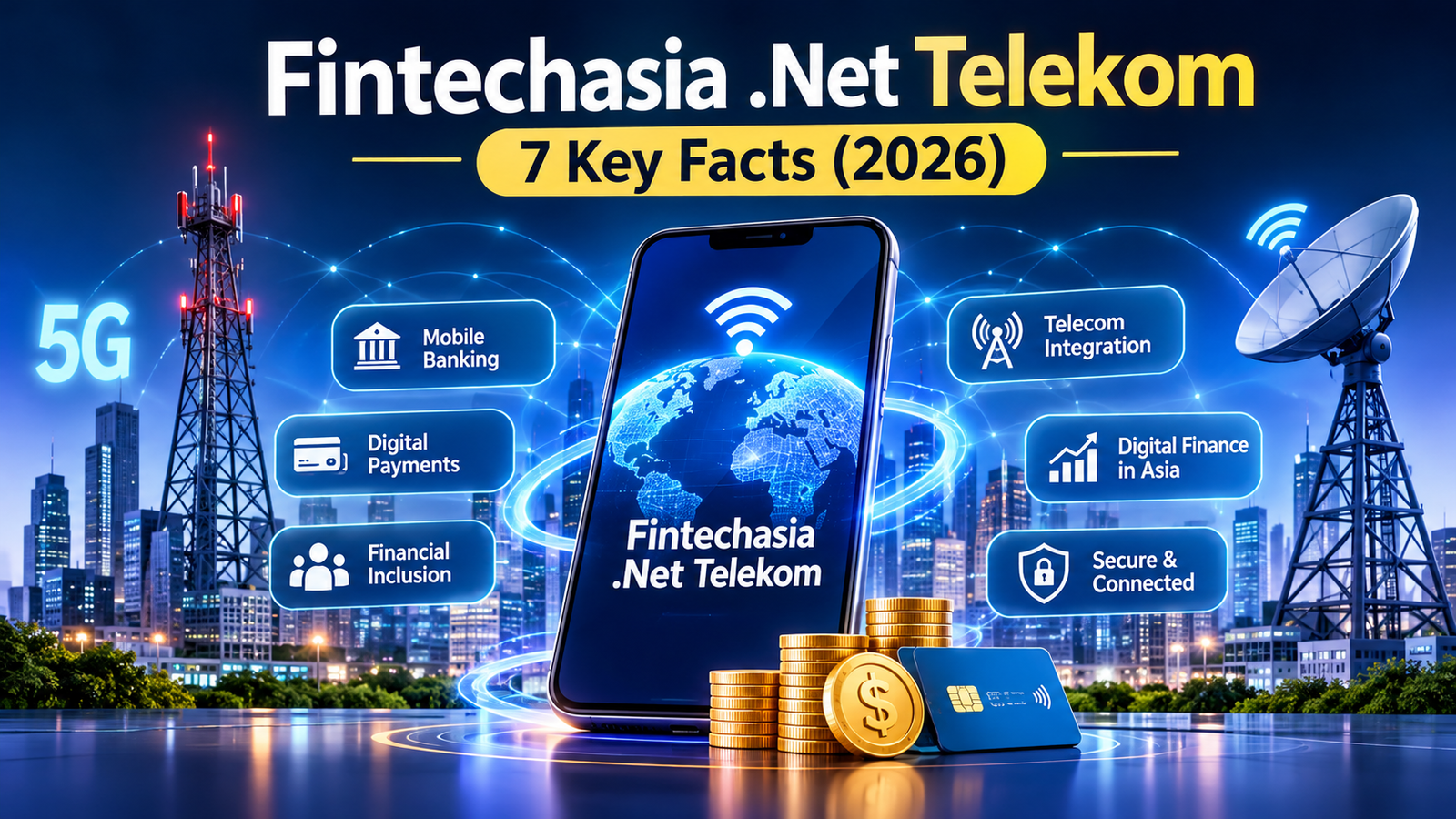
Fintechasia .Net Telekom is a search term related to financial technology and telecommunications. It connects topics such as mobile banking, digital payments, and internet networks.
Today, telecom networks play an important role in digital finance. They help people access banking services, send money, and make online payments through their phones.
In this guide, we will explain the Fintechasia Telekom meaning, its main features, benefits, security risks, and future developments.
1. What Is Fintechasia .Net Telekom?
Fintechasia .Net Telekom is a search phrase associated with financial technology, online networks, and telecommunications. It is best understood as a topic about how these industries work together, rather than a verified bank or financial service.
The term brings together three main ideas:
- Fintech: Technology used to provide financial services.
- Net: Internet connections and online networks.
- Telekom: Communication services that connect people and devices.
These three areas support many modern digital services.
For example, a person can use a mobile banking app to send money. The phone connects to the internet, and the bank processes the payment through its financial system.
This shows how telecommunications support financial activities.
It is also important to check the identity of any website using a similar name. A matching domain name does not prove that a website belongs to a trusted financial company.
2. How Does Telecom Fintech Integration Work?
Telecom fintech integration connects communication networks with financial technology services. It allows banks, payment providers, and customers to exchange information.
Here is how a typical online payment works:
- A customer opens a banking or payment app.
- The phone connects to mobile data or Wi-Fi.
- The app sends a payment request.
- The bank checks the account and transaction details.
- The payment system processes the request.
- The customer receives a confirmation.
Each step depends on communication between different systems.
Telecom networks carry information between the customer’s device and the financial provider. The bank or payment service handles the actual financial transaction.
Why Is Internet Connectivity Important?
A stable internet connection helps customers use financial applications without interruptions.
Weak signals and slow connections can delay payments. They may also prevent customers from accessing their accounts.
For this reason, financial providers need reliable networks and systems that can handle failed transactions.
3. Mobile Banking and Digital Payments
Mobile banking and digital payments are common examples of financial technology. Both services allow people to manage money through connected devices.
Mobile banking gives customers access to their bank accounts through smartphone applications. Digital payments allow them to pay for products, services, and bills without using physical cash.
Common mobile banking activities include:
- Checking account balances.
- Sending and receiving money.
- Paying electricity and internet bills.
- Transferring money between accounts.
- Receiving payment notifications.
- Reviewing transaction history.
Digital wallets also make payments easier. Users can connect supported payment methods and make transactions through their phones.
Mobile Banking and Digital Wallets
Although mobile banking and digital wallets are related, both offer different services.
With a mobile banking app, users can check account balances, manage transactions, and transfer money. Digital wallets allow customers to store payment methods and make online or in-store purchases.
Some applications combine these services in one place. Available features depend on the provider and country.
4. How Telecom Infrastructure Supports Digital Finance
Telecom infrastructure is an important part of digital finance in Asia. It includes mobile towers, internet networks, broadband connections, and data centers.
These systems help financial applications communicate with banks and payment providers.
Mobile Networks and Internet Access
Mobile networks allow people to access financial services from different locations.
Customers can use mobile applications to check accounts and make payments. They do not always need to visit a bank branch.
Reliable internet access is especially important for services that require continuous communication.
SMS and USSD Services
Not everyone has a smartphone or a strong internet connection. SMS and USSD services provide other ways to access selected mobile financial services.
USSD allows users to access simple menus through basic mobile phones. SMS can deliver payment alerts and verification messages.
These services can help people who have limited internet access.
Telecom Infrastructure and Rural Digital Payments
People in rural areas may live far from banks and financial centers. They may also face poor internet coverage.
Mobile networks can help reduce these problems. People can use supported mobile services to send money and access basic financial features.
Mobile money agents can also help customers deposit and withdraw cash.
However, network access alone cannot solve every problem. Affordable devices, digital skills, and reliable financial services are also necessary.
According to the World Bank’s Global Findex 2025 report, 86% of adults worldwide owned a mobile phone. However, many people still face barriers to accessing financial services.
Source: World Bank Global Findex.
5. Seven Major Benefits of Financial Technology and Telecommunications
Financial technology and telecommunications work together to improve digital services. Their combination offers several benefits.
1. Easy Access to Financial Services
People can use mobile devices to access supported financial services. This reduces the need to visit physical bank branches for everyday activities.
2. Convenient Money Transfers
Digital payment applications make sending and receiving money easier. Users can complete supported transactions through their phones.
3. Faster Payment Services
Connected systems allow payment requests and confirmations to move between users and providers. Actual processing times depend on the payment service and network.
4. Better Financial Inclusion
Mobile financial services can reach people who live far from traditional banks. They provide more ways to access basic financial services.
5. Improved Business Operations
Businesses can accept digital payments and track transactions. These services also help reduce some manual work.
6. Better Customer Communication
Telecom networks support SMS alerts and transaction notifications. Customers can receive updates about their financial activities.
7. New Technology Opportunities
Telecom and fintech companies can develop new payment solutions. These may include digital wallets, mobile banking services, and online financial products.
The GSMA reported that mobile money services processed more than $2 trillion in transactions globally during 2025.
Source: GSMA State of the Industry Report 2026.
6. Security and Privacy Challenges
Digital financial services offer convenience, but they also create security risks. Users must protect their personal and financial information.
Some common risks include:
- Phishing: Fake emails and messages that try to steal personal details.
- Account theft: Unauthorized access to financial accounts.
- SIM swapping: Criminals try to take control of a phone number.
- Weak passwords: Simple passwords can make accounts easier to access.
- Data privacy risks: Some applications collect personal and financial information.
How Can Users Protect Their Accounts?
Users can follow a few simple steps to improve account security.
- Use strong and unique passwords.
- Enable two-factor authentication.
- Never share one-time passwords.
- Download apps from trusted sources.
- Avoid suspicious payment links.
- Keep mobile applications updated.
- Check account activity regularly.
Financial providers should also use secure systems. Encryption, fraud monitoring, and strong authentication can help protect customers.
7. Future of Fintechasia .Net Telekom
The future of Fintechasia .Net Telekom is connected to the growth of financial technology and telecommunications.
New technologies are changing how people access financial services. Several developments may influence this industry.
5G and Better Connectivity
5G networks can provide faster internet connections and support more connected devices.
They may improve the performance of digital applications and online financial services.
However, payment speed also depends on the financial provider and its processing systems.
Artificial Intelligence
Artificial intelligence can help financial companies identify unusual transactions. It can also improve customer support and detect possible fraud.
These systems still need proper security checks and human oversight.
Digital Identity
Digital identity systems help financial providers verify customers online.
They can make account registration and authentication easier. Strong identity protection is still necessary to prevent misuse.
Growth of Mobile Money
Mobile money is becoming an important part of digital finance.
It allows people to send, receive, and manage money through supported mobile services. This can be useful in areas with limited access to traditional banking.
Better Financial Security
As more people use online financial services, security will become even more important.
Financial providers will need to protect customer information and prevent unauthorized transactions.
The International Telecommunication Union (ITU) reported that around 2.2 billion people remained offline in 2025. This shows why affordable internet access is still important.
Source: ITU Facts and Figures 2025.
Conclusion
Fintechasia .Net Telekom is a search topic connected to financial technology, internet networks, and telecommunications.
These industries work together to support mobile banking, digital wallets, and online payments. Telecom infrastructure provides the connection that allows financial systems to communicate.
Digital finance offers many benefits, including convenient payments and better access to financial services. However, security, privacy, and internet access remain important challenges.
As technology develops, telecommunications will continue to support the growth of digital financial services.
Frequently Asked Questions
1. What Is Fintechasia .Net Telekom?
Fintechasia .Net Telekom is a search phrase associated with financial technology, internet networks, and telecommunications. It covers topics such as mobile banking and digital payments.
2. What Is the Fintechasia Telekom Meaning?
The Fintechasia Telekom meaning relates to the connection between financial technology and telecommunications. It includes mobile financial services and digital communication networks.
3. How Does Telecom Fintech Integration Work?
Telecom fintech integration connects communication networks with financial platforms. It allows customers, banks, and payment providers to exchange information.
4. How Does Telecom Infrastructure Support Digital Payments?
Telecom infrastructure provides mobile and internet connectivity for payment applications. It helps transfer transaction information and deliver payment confirmations.
5. Is Mobile Banking Safe?
Mobile banking can be safe when providers use strong security systems. Users should also use strong passwords and avoid sharing verification codes.
6. What Is the Future of Digital Finance in Asia?
Digital finance in Asia may grow through mobile payments, artificial intelligence, and better internet connectivity. Security and affordable access will remain important.